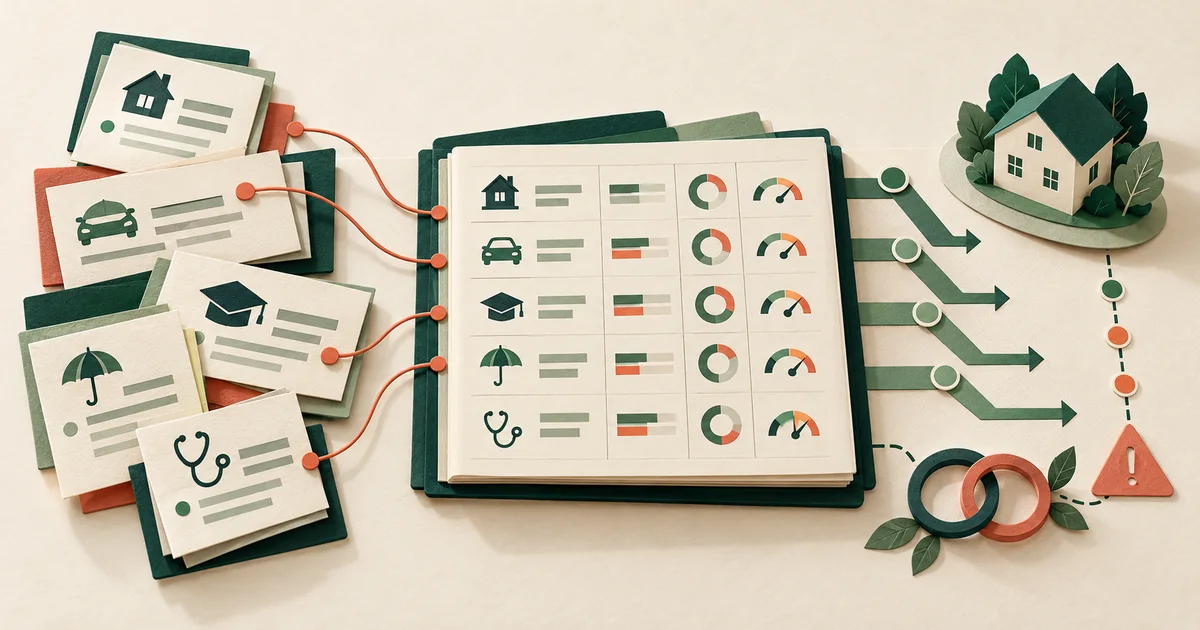
Columns for each obligation
- Balance and date
- APR and type
- Minimum and due date
- Promotion or reset date
- Borrowers and guarantors
- Collateral
- Statement location
Capture the current obligation
Record creditor, debt type, current balance and “as of” date, interest rate or APR, minimum payment, due date, term, and whether the rate is fixed or variable. For promotional rates, record the exact end date and post-promotion terms.
A debt can be current, disputed, deferred, in a temporary arrangement, delinquent, charged off, in collection, settled, paid, or unresolved. Use the exact status shown by the source and record the date rather than choosing a label based on memory.
Link each row to the contract, latest statement, payoff quote if requested, and relevant correspondence. A payoff amount can differ from a statement balance, so label both clearly.
Record who and what is exposed
Name borrowers, co-borrowers, co-signers, and guarantors. Identify collateral such as a home or vehicle. Note any personal guarantee attached to business debt and any tax or legal priority that may change the consequences of nonpayment.
Keep statement balance, payoff amount, credit limit, and original principal in separate fields because they answer different questions. A statement balance supports monthly reconciliation, while a dated payoff quote may include accrued interest or fees. Label every amount with its source and date so later calculations do not combine figures that were measured for different purposes.
If statements and bureau files disagree, follow the debt and credit-report reconciliation process before treating the list as complete. For changing terms, calendar rate resets and promotional expirations. Then compare balances, payments, and APRs in the private debt inventory tool.
Five facts explain most debts
The balance shows size. The payment shows cash pressure. The APR shows cost. Collateral shows risk. Borrower roles show who is responsible.
- Date every balance.
- Record fixed, variable, or special-rate terms.
- Name each borrower, co-signer, and guarantor.
Practical tip: Keep an unknown field visible. A blank question is safer than a guessed answer.
The facts that turn balances into decisions
- Date every balance and rate
- Identify all liable people and collateral
- Track reset, maturity, and promotion dates
- Reconcile statements without relying only on credit reports
Reconcile the map
Compare the inventory with statements and your credit reports, but do not assume a credit report is complete. Family loans, taxes, medical balances, buy-now-pay-later accounts, and some business obligations may require separate records.
Compare the map with bank outflows, payroll deductions, tax records, credit reports, court records in the household’s possession, and recurring payment apps. Ask specifically about family loans, medical plans, buy-now-pay-later balances, business guarantees, and taxes.
The goal is not to make every source agree instantly. It is to identify mismatches and assign follow-up, preserving the evidence used to resolve each one.
The role field should match the signed obligation, not household custom. Someone may make payments without being a borrower, own collateral without receiving statements, or guarantee only a defined part of a business obligation. When the documents are unclear, mark the role unresolved and link the agreement for review instead of converting an assumption into a household fact.
Turn the inventory into decisions
Add total minimum payments to see the fixed monthly burden. Then model payoff approaches, refinancing, or negotiated changes using real terms. Keep emergency liquidity and secured-debt consequences visible when choosing what to pay first.
Turn each proposed action into a comparison with a baseline. Record the current payment, estimated total cost, finish date, fees, collateral effect, liquidity required, and what happens if income falls. A lower monthly payment may extend the term or increase cost, while aggressive repayment may leave the household unable to absorb an emergency. Keep those tradeoffs visible beside the recommendation.
Reconcile the debt ledger before prioritizing it
- Gather contracts and current statementsCollect authoritative records for household, tax, medical, family, and business-related obligations.
- Normalize the fieldsRecord balance date, rate, payment, due date, term, parties, and security consistently.
- Mark uncertaintyKeep unknown rate, ownership, or status fields visible instead of guessing.
- Calculate the fixed burdenTotal required payments and place change dates on the household calendar.
Calculate totals from the completed debt ledger
The debt tool totals balances and required payments and compares APRs. The broader organizer can connect each obligation to its source records and responsible people.
- Use a private debt inventory and APR comparison toolCalculate total debt, required monthly payments, weighted APR, and an illustrative highest-rate-first comparison in your browser.
- Use a private financial inventory organizerBuild a clear index of what exists, who owns it, and where the authoritative record lives. Entries remain in this browser unless you export them.
Unknown facts should stay visibly unknown
Do not guess a rate, owner, status, payoff amount, or legal responsibility. Record the uncertainty, preserve the source, and assign the follow-up needed to resolve it.
Questions about balances, reports, and disputes
Is a credit report a complete debt list?
No. It is an important cross-check, but some obligations may not be reported or may update on different schedules.
Should a payoff quote replace the current balance?
Keep both when useful and label the date and purpose of each amount.
How should a disputed debt be listed?
Record the claimed amount, disputed status, source, evidence, and next action without treating the dispute as resolved.
Sources for debt records and credit checks
These first-party government, regulator, or established professional sources support the specific task above. They are provided for verification and do not imply endorsement.