Build a debt inventory checklist for repayment decisions
Practical guide · 7–10 min
The goal is not a shame list. It is a cash-flow and risk map that supports better decisions.
Read build a debt inventory checklist for repayment decisionsA balance alone does not describe a debt. A useful debt map shows the cost, minimum obligation, security, ownership, and consequences of missing a payment. That context makes prioritization possible.
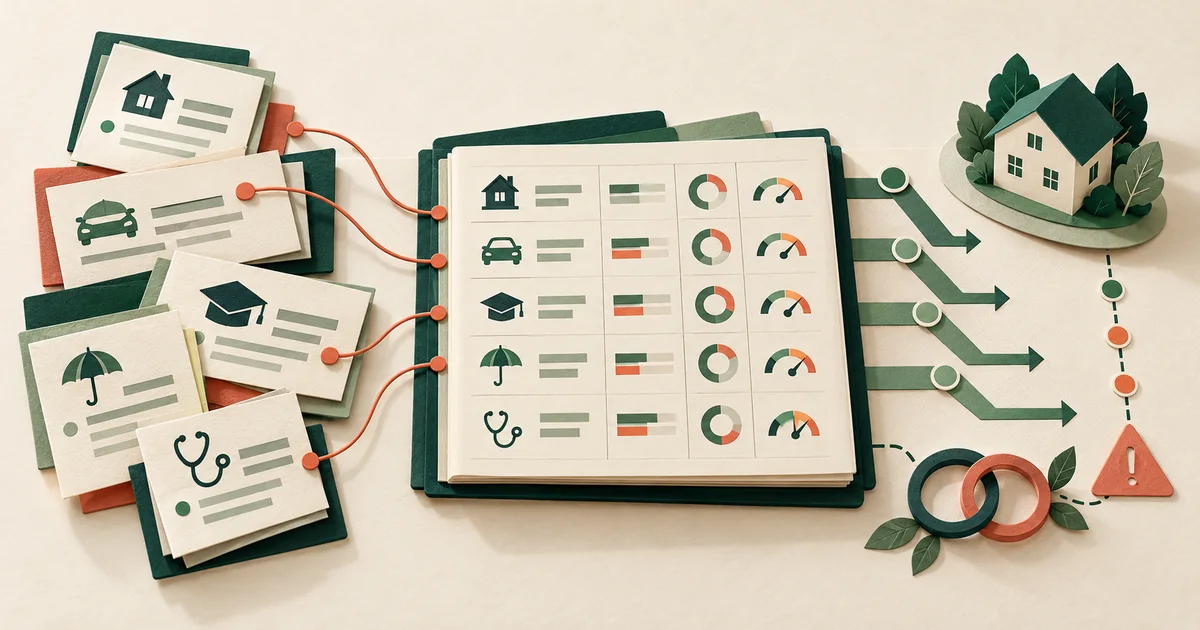
Balance, APR, minimum payment, due date, and rate-reset rules.
Identify joint borrowers, guarantors, and pledged collateral.
Compare cost, cash-flow relief, and risk rather than chasing one number.
Create a complete obligation map before choosing a payoff order. The later guides help verify bureau records, compare strategies, calendar rate changes, and respond when a payment may be missed.
The goal is not a shame list. It is a cash-flow and risk map that supports better decisions.
Read build a debt inventory checklist for repayment decisionsThe mathematically cheapest method and the method a household can sustain are sometimes different. Compare both with the same payment budget.
Read debt avalanche vs. snowball“Connected to the account” can describe very different legal and practical responsibilities.
Read map joint debt, co-signers, and guaranteesA credit report is an important cross-check, not a complete household debt ledger. Reconciliation compares it with current statements, contracts, court or tax records, and debts that may not be reported.
Read reconcile debts with your credit reportsVariable debt becomes dangerous when the household tracks today’s payment but not the event that can change it. A calendar turns contract terms into advance review dates.
Read track variable-rate loans, apr changes, and promotionsWhen money is short, the first task is not choosing a perfect payoff method. It is preventing avoidable harm, protecting essentials, and creating a verified record of every request and response.
Read what to do when you cannot make debt paymentsA decision-ready debt inventory combines the dated balance with required payment, effective rate, change dates, borrower roles, collateral, status, and source evidence.
A current balance measures only one dimension. Record the required payment, effective rate, due date, fixed or variable status, collateral, and each borrower or guarantor. Together, those fields reveal the monthly burden, borrowing cost, and consequences of a missed payment.
Compare statements with credit reports, but also check taxes, medical balances, family loans, buy-now-pay-later plans, and business obligations that may not appear there. Date every balance so later comparisons do not mix figures from different statement periods.
Build the evidence base with the source-based debt inventory method, then compare verified balances and APRs in the private debt snapshot.
Short answers establish the safe starting point; the linked guides handle the full task.
Record the creditor, borrower roles, dated balance, required payment, due date, effective rate, rate-change rules, collateral, and location of the contract or statement.
No. It is an important cross-check, but taxes, medical balances, family loans, some payment plans, and other obligations may need separate source records.
Not always. Essential housing, pledged property, court or tax deadlines, delinquency, and expiring promotions can create risks that need attention before a rate-only payoff order.