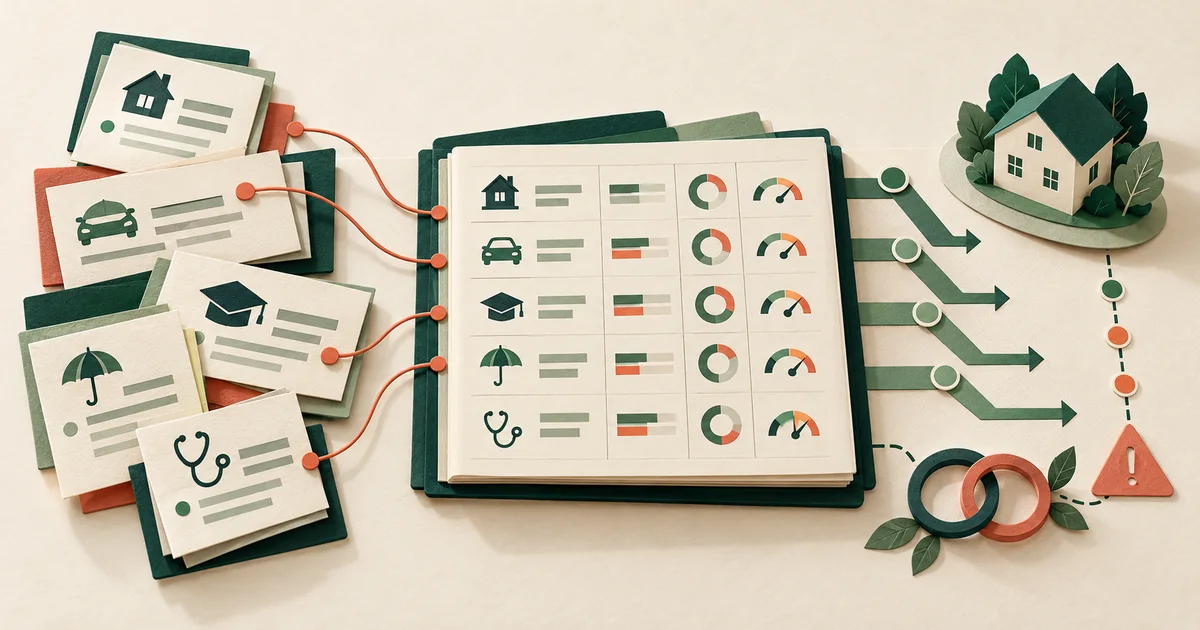
Resolve one reported line at a time
- Freeze the comparison dateSave the reports and statements used, because balances and statuses change.
- Match by creditor and masked referenceConnect original creditors, servicers, and collectors without assuming similar names are duplicates.
- Classify discrepanciesMark timing differences, unfamiliar accounts, incorrect status, wrong ownership, duplicate reporting, or missing records.
- Document the resolutionRecord the channel, confirmation number, evidence sent, response, and next review date.
A credit report is a cross-check, not the debt ledger
Reporting can be incomplete, delayed, duplicated, or inaccurate, while some obligations may not appear at all. Keep contracts and current statements as separate source evidence.
Build from obligations, not bureau rows
Begin with contracts and current statements for cards, loans, mortgages, taxes, medical balances, family loans, business guarantees, buy-now-pay-later plans, and court-ordered obligations. Record creditor, servicer, balance date, rate, minimum, due date, and borrower role.
Then obtain reports through the official channel and add report-specific identifiers. Some obligations may not appear, and reporting can lag. Absence from a report does not by itself establish that a debt is invalid or no longer owed.
What a mismatch can and cannot tell you
- Use statements as the balance-date source
- Review reports from every nationwide bureau
- Treat missing debt as unresolved, not erased
- Keep a dispute evidence log
Understand name and timing differences
A report may show a servicer or collector rather than the business a consumer remembers. A transferred account can show the original account and a new owner with different statuses. Match masked numbers, dates, balances, and documentation before deciding two rows represent one debt.
Statement dates and bureau update dates rarely align perfectly. Compare the as-of dates and recent payments first. A timing difference needs monitoring; an ownership or status error may need correction.
Create a source column for every amount and status before comparing rows. A current creditor statement, collection letter, court record, and bureau entry may describe different points in the same obligation's history. Keeping the source and date visible lets the household investigate a mismatch without deleting evidence or counting two related records as two separate debts.
Preserve each report, statement, and resolution using the financial document filing method. Once the evidence agrees, update the verified figures in the private debt and APR tool rather than maintaining competing totals.
A mismatch is a question, not an answer
A statement and a credit report may use different dates or names. Compare the evidence before calling either record wrong.
- Match the creditor and masked reference.
- Compare the reporting dates.
- Save proof of every correction or dispute.
Practical tip: Keep the old value in a change log so the next reviewer can see what changed.
Handle unfamiliar or inaccurate information methodically
Do not call a phone number supplied in an unexpected message. Use independently verified bureau and creditor channels. Save the report version, highlight the disputed fields, gather relevant statements or identity-theft records, and describe the exact correction requested.
Keep sensitive evidence narrow. Send only what the official process requires, redact unrelated information where accepted, and retain a copy of the submission and response. Identity-theft concerns may require a different process from an ordinary data error.
Evidence for the discrepancy register
- Source statement
- Report and bureau
- As-of date
- Creditor or furnisher
- Masked reference
- Mismatch category
- Evidence file
- Follow-up date
Close the reconciliation loop
Update the inventory only when there is evidence: a new statement, written correction, satisfaction notice, settlement record, or report refresh. Keep the prior status and date in the change log so the household can explain what changed.
A remaining mismatch becomes an open task with an owner and next date. That is more useful than forcing the numbers to agree or deleting an uncomfortable row simply because one source does not show it.
Carry confirmed obligations into the debt snapshot
After reconciliation, use the tools to record confirmed balances, payments, APRs, owners, and source locations. Keep disputed items visibly marked.
- Use a private debt inventory and APR comparison toolCalculate total debt, required monthly payments, weighted APR, and an illustrative highest-rate-first comparison in your browser.
- Use a private financial inventory organizerBuild a clear index of what exists, who owns it, and where the authoritative record lives. Entries remain in this browser unless you export them.
Questions about errors, timing, and report coverage
Does every debt appear on a credit report?
No. Reporting practices and coverage vary, so use reports as a cross-check rather than the only inventory source.
Does a missing collection mean it is not owed?
Not by itself. Verify the obligation, ownership, limitation issues, and local law with appropriate records or qualified help before acting.
Should all three reports be identical?
Not necessarily. Furnishers may report to different bureaus or on different schedules, but factual inaccuracies should still be investigated.
Official credit-report and dispute guidance
These first-party government, regulator, or established professional sources support the specific task above. They are provided for verification and do not imply endorsement.